Electronic Shelf Labels
An electronic shelf label (ESL) reads the price from your POS or inventory software and writes it to the shelf on an e-ink display. Instant updates, on-site installation and local technical support.
Definition
What Is an Electronic Shelf Label?
An electronic shelf label (ESL) is a wireless system that shows price and product information on an e-ink display instead of paper. When the price changes in your software, the label refreshes itself — staff no longer walk the aisles reprinting tags.
E-ink screens stay readable in daylight and use power only when the image changes. Typical battery life is 3–7 years, depending on daily update frequency, temperature and screen size. A “10-year battery” claim is meaningless without the assumed update count.
ESLink installs ESL systems in Turkey and Northern Cyprus with on-site survey, installation, integration and local technical support. A gateway delivers updates to the labels; the management software connects to your POS or ERP. The hardware supply model is stated in the project quote.
Benefits of Electronic Shelf Labels
- Update shelf prices from a central source in seconds
- Reduce mismatches between shelf and checkout
- Remove reprinting work when promotions change
- Typical 3–7 year battery life depending on usage
- Project-based integration with your POS or inventory software
System
How the label, gateway and software connect
An ESL is not a single screen. The label, the in-store gateway and the software that reads the price work together. Your price source stays the same; the system carries that price to the shelf.
E-ink shelf label
Shows price, unit price, barcode or QR on the shelf. Mounts with magnet, adhesive or rail. Battery is used only when the image changes.
Gateway (base station)
Forwards software updates wirelessly to labels in range. Typical planning figures are 500–1,000 labels per gateway and about 25 m in open space; metal shelving and partitions shorten range. The actual count is set after the store survey.
Management software
Reads the price from your POS, ERP or inventory system, applies the template and sends it to the matching label. Bulk updates, promotion timing and label status sit in one panel.
Features
Why Electronic Shelf Labels?
Instant Updates
Update thousands of labels in seconds. Price changes reflect immediately.
typical 3–7 year battery life depending on usage
Ultra-low power consumption and long battery life thanks to E-ink technology.
Wireless Connection
Secure and fast data communication with 2.4GHz wireless protocol.
Durable Design
IP54 protection class, operating temperature range from -20°C to +50°C.
Real-time Sync
Instant data synchronization with POS and ERP systems.
Shelf-to-checkout price consistency
Because there is one price source, the gap between shelf and checkout shrinks.
Product Range
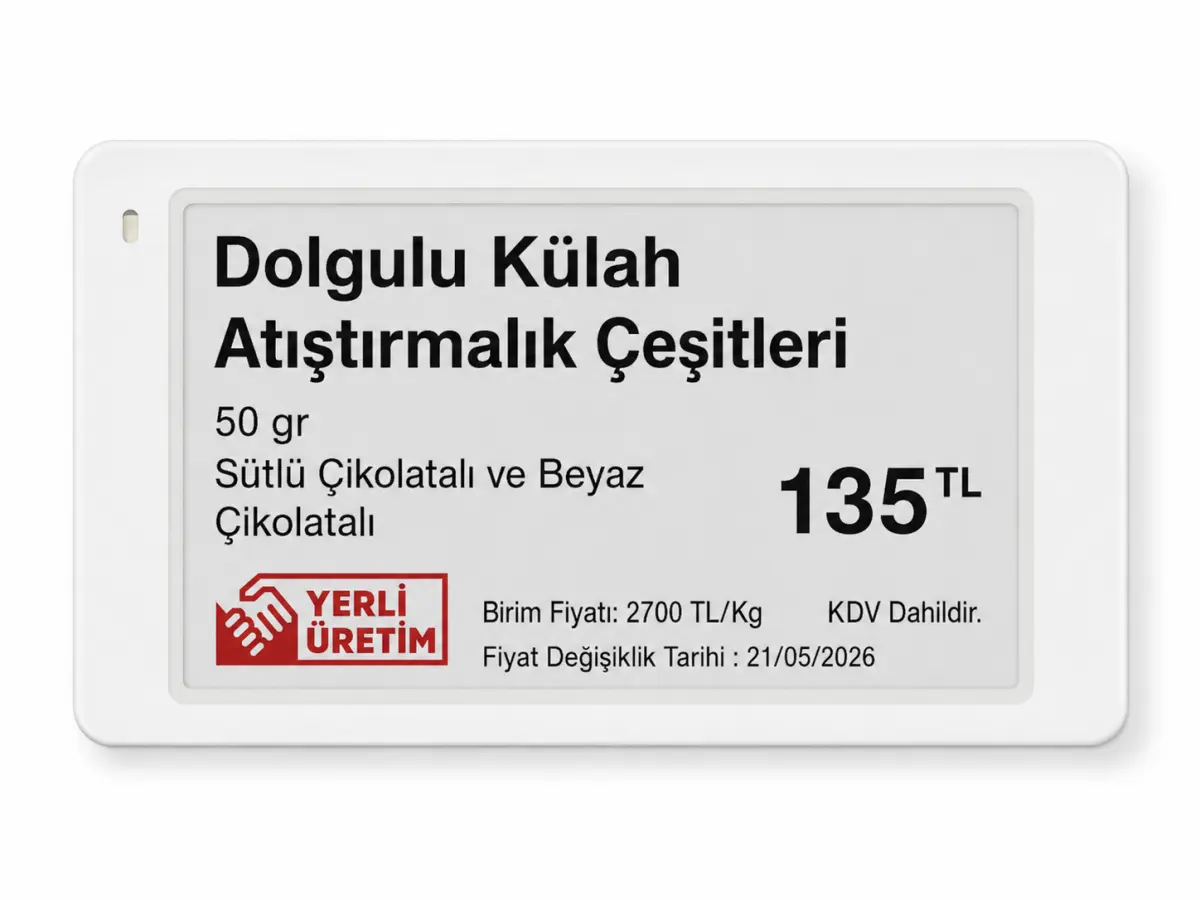
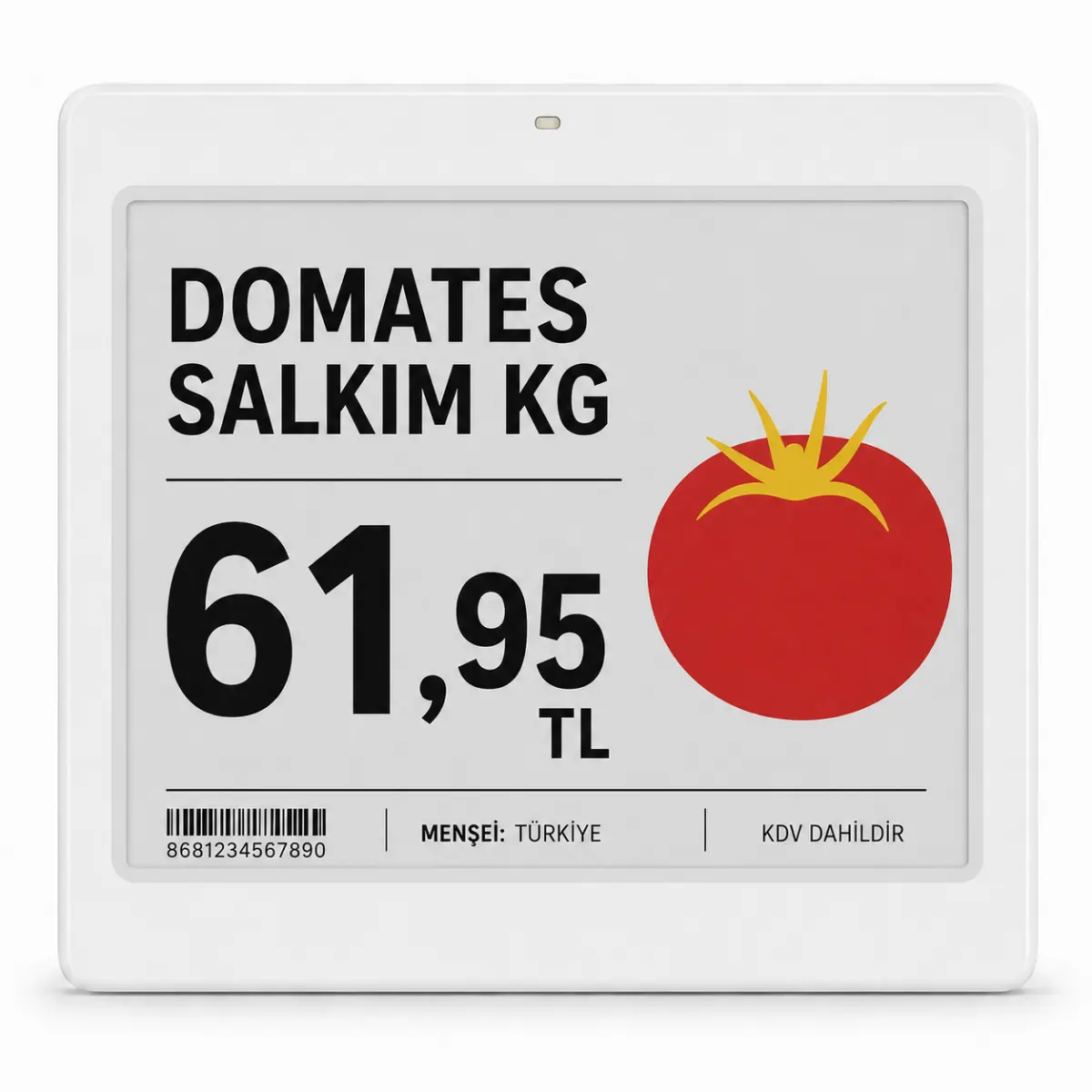
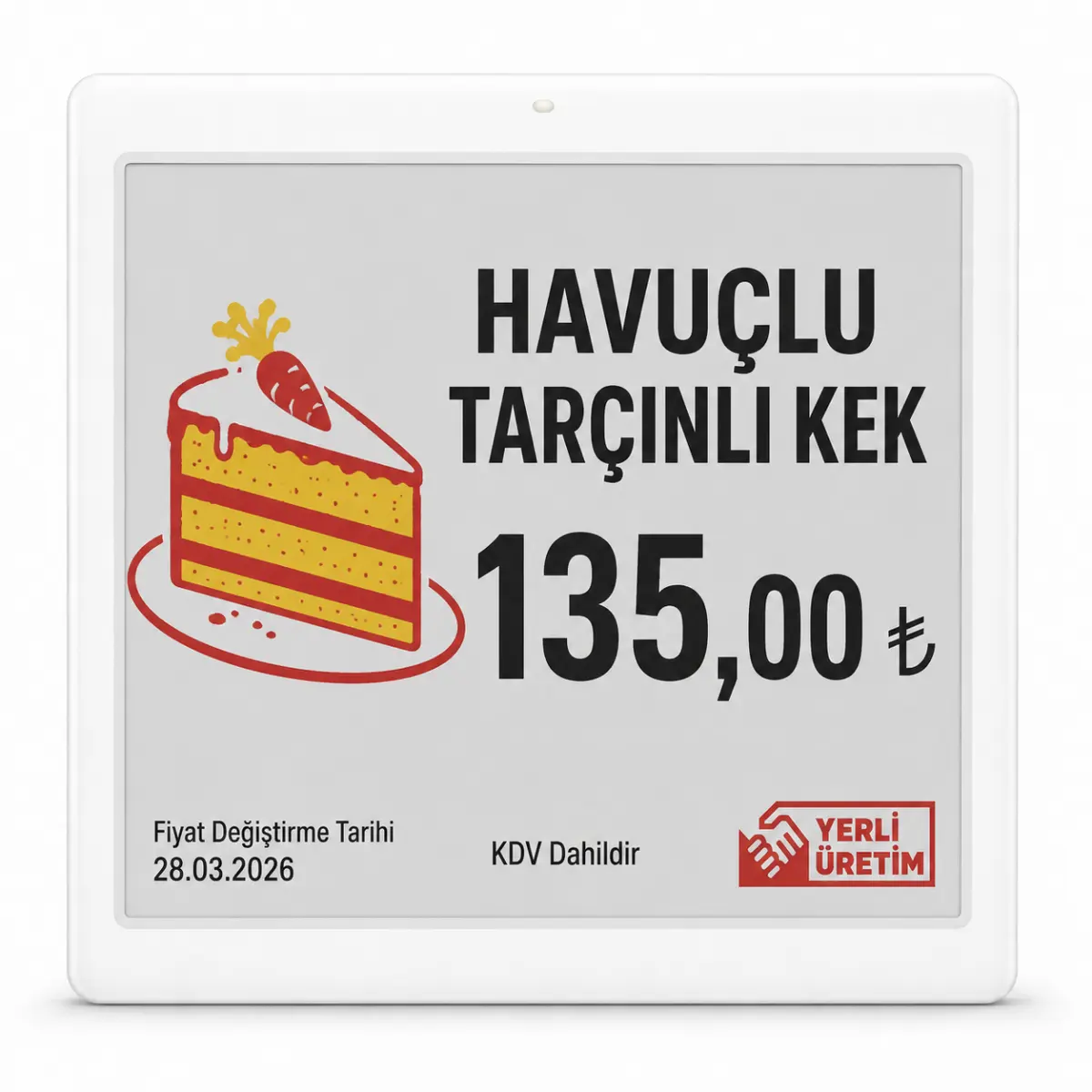
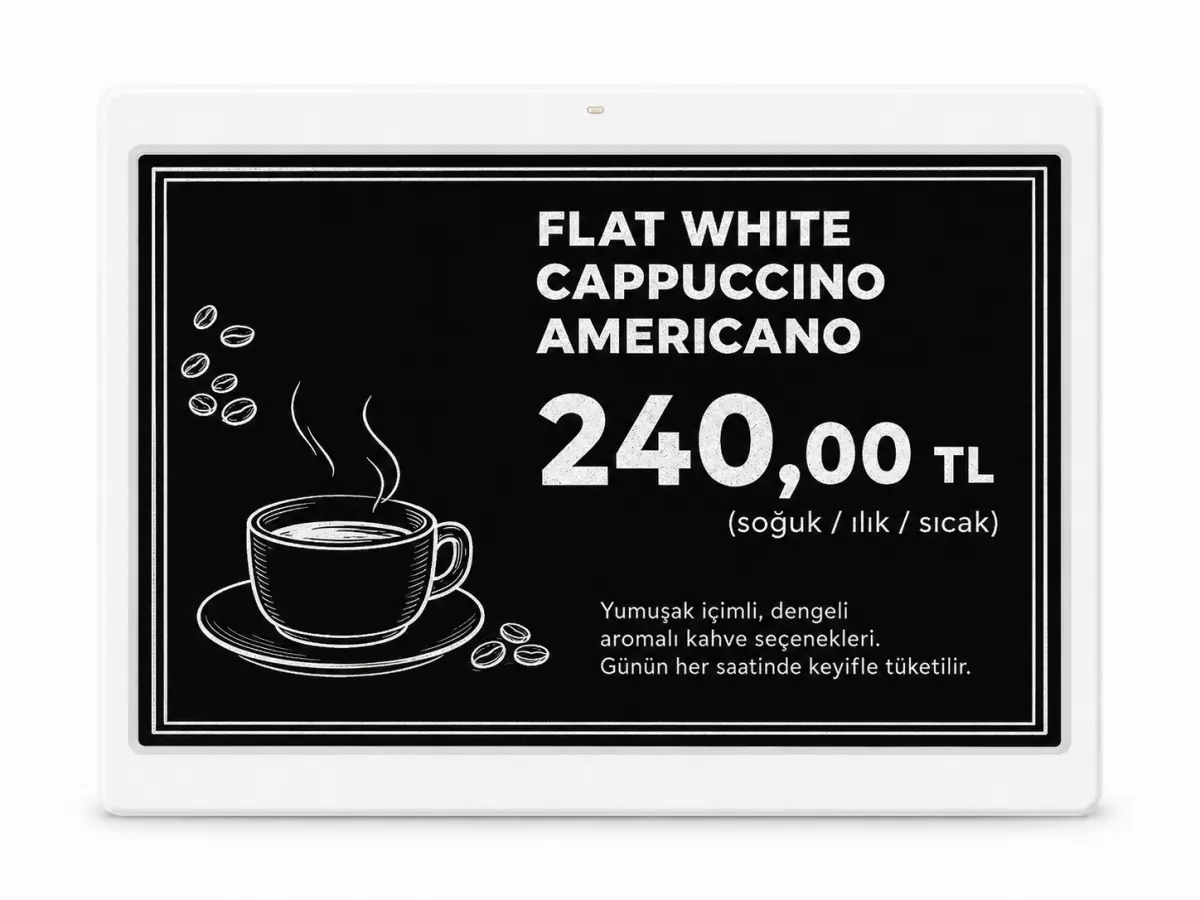
Electronic Shelf Label Models
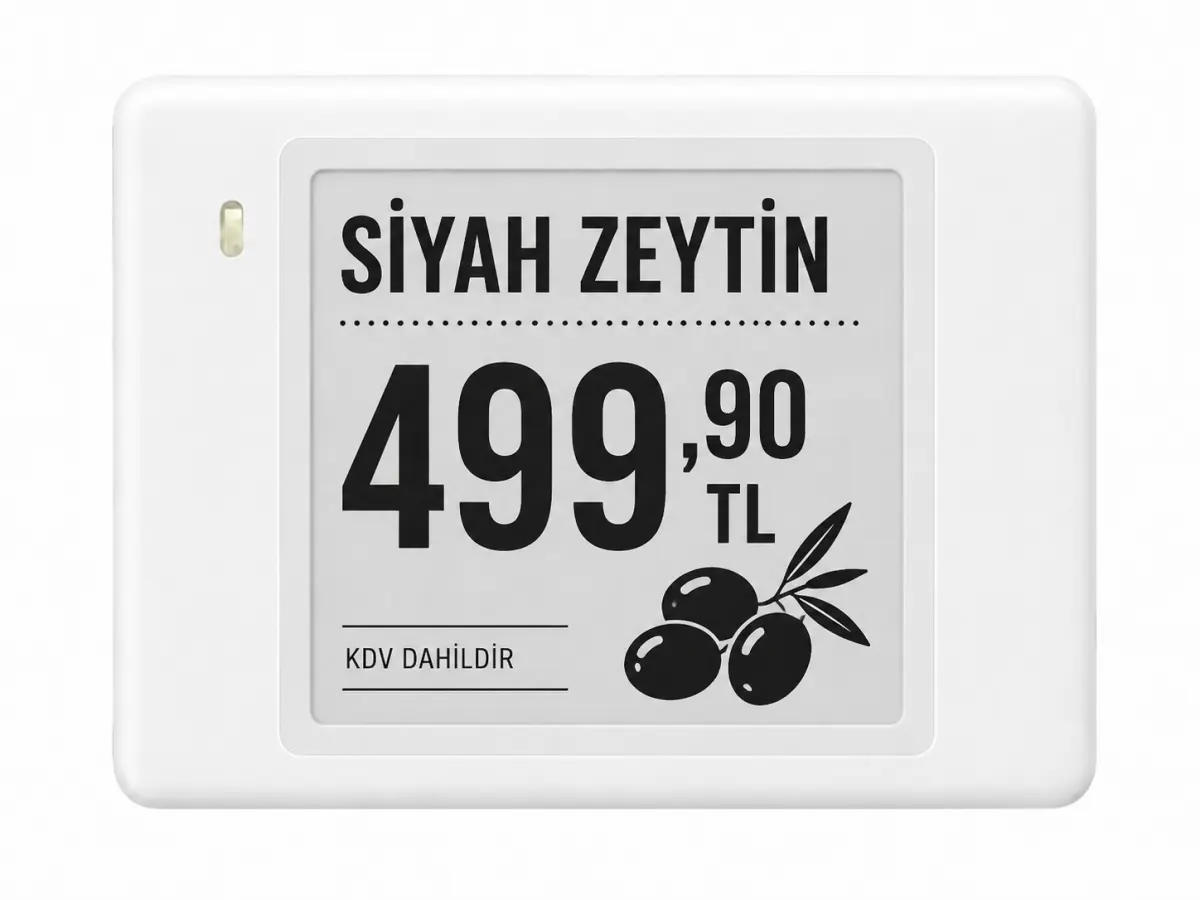
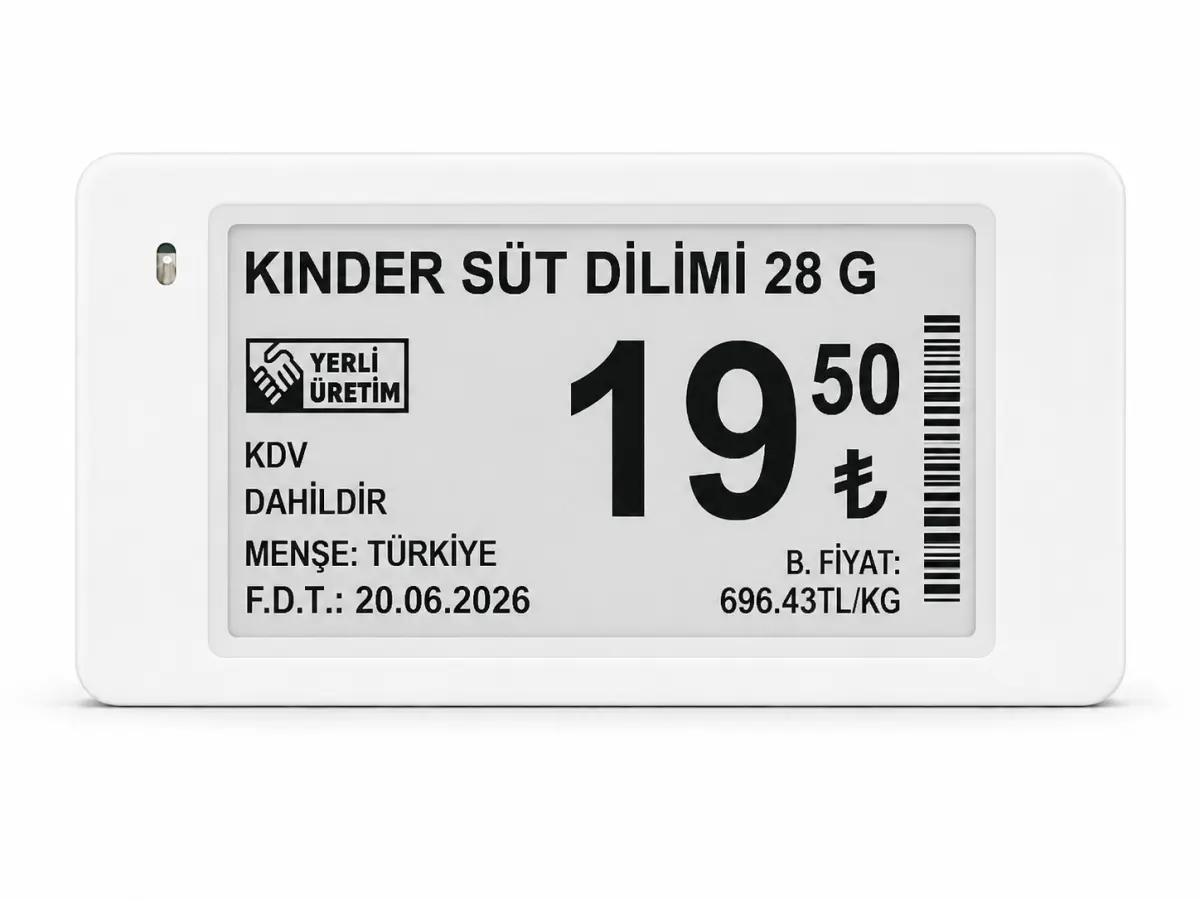
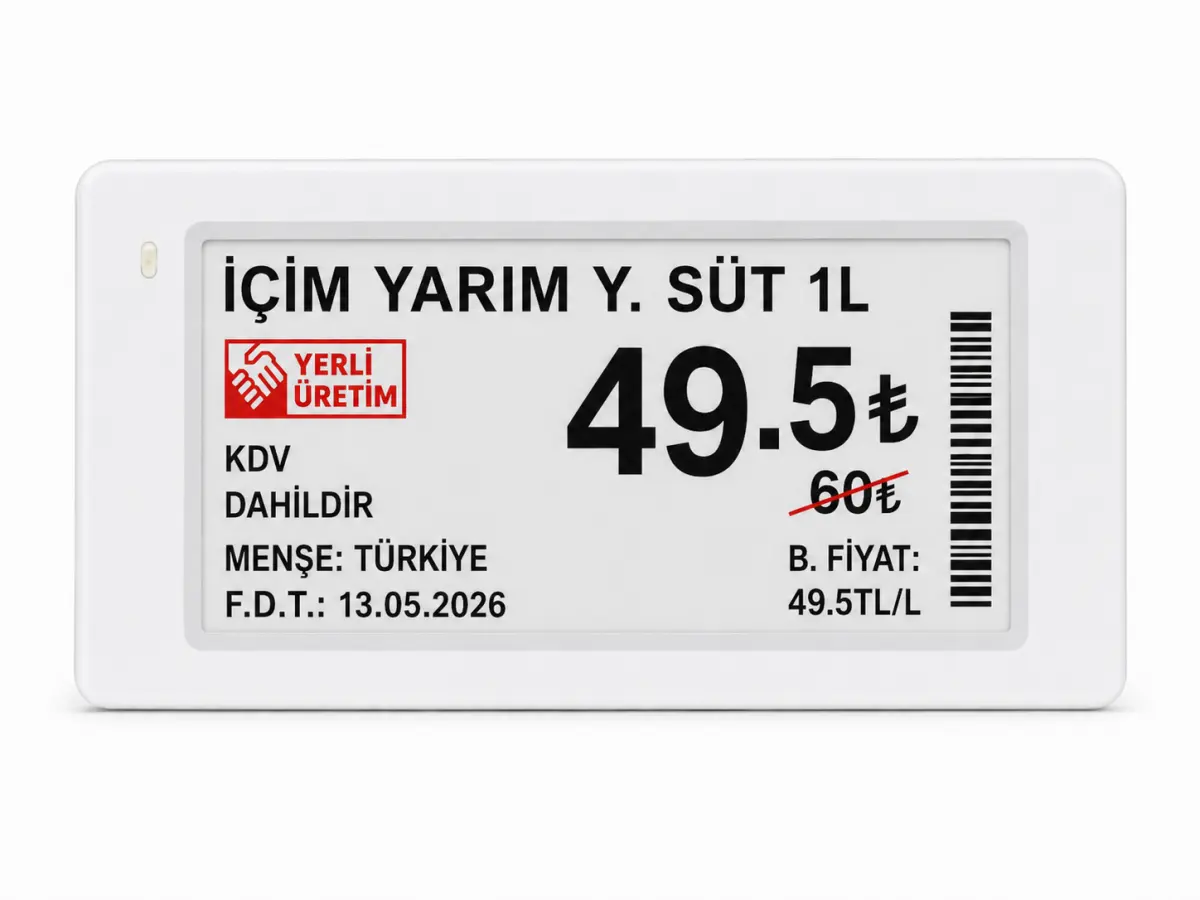
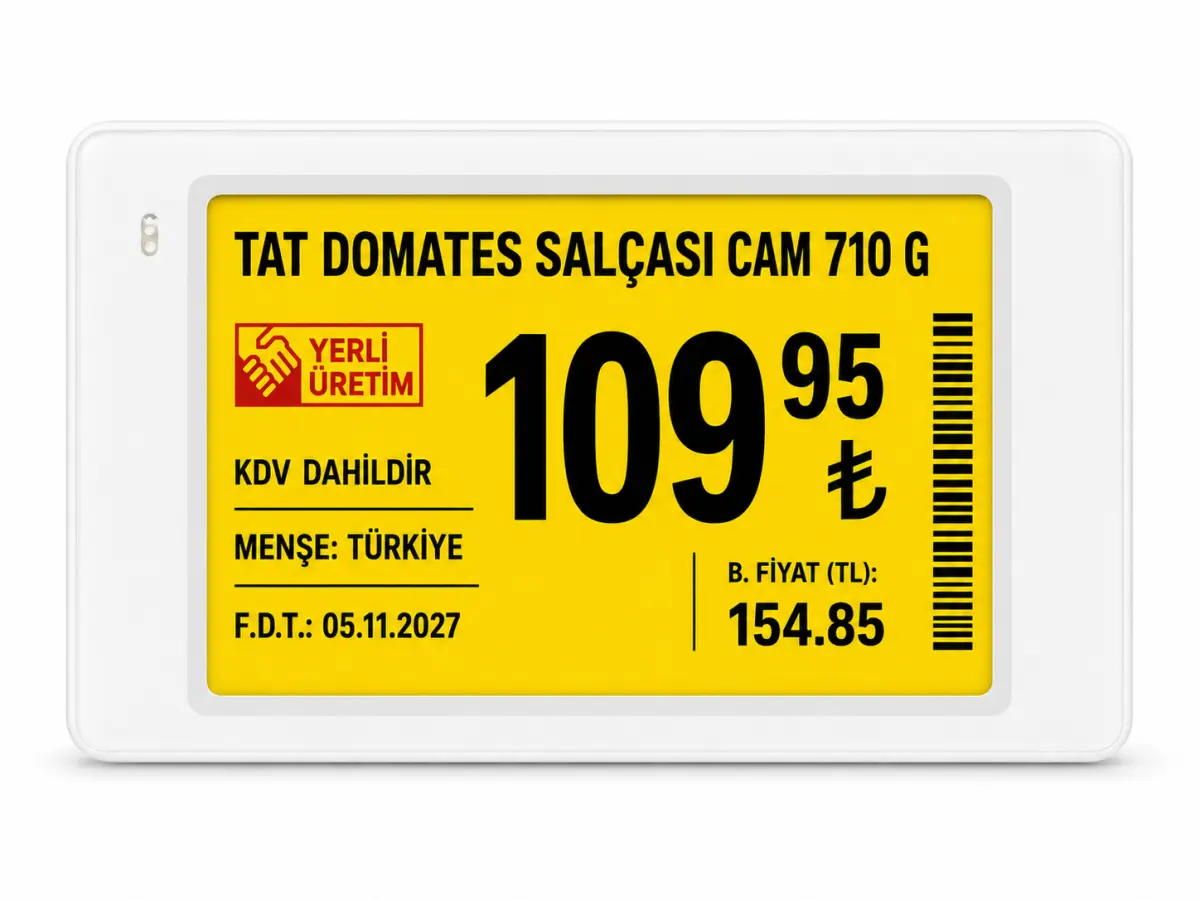
Use Cases
Which Industries Use ESL?
Cost
What makes up the project cost?
A public unit price list would be misleading. Cost depends on label size, colour, SKU count, integration scope and on-site installation. A firm quote follows the assessment.
Label size and colour
1.54"–2.9" edge labels are more economical. 4.2" and above, three-colour (black-white-red) or large displays raise unit cost.
SKU count
How many labels you need sets the investment. Volume lowers unit cost; a 100–500 label starter scope can also be planned for smaller stores.
Software integration
The system should read prices from where you already manage them. API, file or database method is chosen during discovery based on your POS or ERP.
Installation and field support
Gateway placement, mounting, staff training and local technical support are part of the package. A typical supermarket install takes 1–3 days, depending on store size.
Quote line items and currency
The quote lists labels, gateways, software, installation and integration as separate lines. Currency is stated on the quote. Any annual software fee is shown separately.
Guides
In-depth Electronic Shelf Label Guides
Comparison
Electronic shelf labels or paper labels?
Teams searching this topic usually want the cost of leaving paper behind. The short contrast is below; the full table is on the comparison page.
| Electronic shelf label | Paper label | |
|---|---|---|
| Price updates | From the centre, in seconds | Print, cut and walk the aisle |
| Shelf vs checkout | One price source | Manual mismatch risk |
| Labour | No reprinting rounds | Repeated on every campaign |
| Upfront cost | Hardware + install | Low, ongoing consumables |
Everything About Electronic Shelf Labels
Most frequently asked questions and answers about electronic shelf label systems, prices and installation processes
Electronic shelf label (ESL) is a digital price tag that uses e-ink (electronic ink) technology. Price, product information and promotion updates can be made instantly from a central system via wireless connection. Unlike paper labels, prices of thousands of products can be changed automatically in seconds. Thanks to e-ink technology, it provides perfect readability even in sunlight and battery life is typically 3–7 years depending on usage.
Electronic shelf label prices vary depending on screen size, color features and order quantity. Small labels (1.54"-2.9") offer more economical options, while large screens (10"+) have higher prices. At ESLink we share clear, project-based pricing. Package options can include installation, software and technical support. Contact us for a detailed quote.
Discovery, installation and local technical support in Turkey and Northern Cyprus run through ESLink Technologies. We offer a free survey meeting and demo. Hardware and software scope is listed line by line in the project quote. Use the contact form or email.
ESLink electronic shelf label installation is very easy. With magnetic, adhesive or rail mounting options, it adapts to every shelf type. Installation for an average supermarket is completed within 1-3 days. Our expert team does on-site installation and trains your staff. Integration with your existing POS and ERP system is also included in the installation process.
Battery life typically ranges from 3–7 years depending on usage intensity (daily update frequency, temperature, connectivity). Exact duration varies by field conditions.
Electronic shelf labels are used in supermarkets and hypermarkets, pharmacies (with insurance price integration), electronics stores, hardware stores, warehouse and logistics centers, industrial facilities, libraries and many more sectors. We offer customized solutions for each industry.
Integration with your existing POS or inventory software is assessed during project discovery. Our technical team plans the suitable method with you.
Digital price labels, automatic price updates and shelf management for pharmacies.
Electronic shelf label investment pays for itself in an average of 12-24 months. Savings sources: 90% savings from manual labeling labor, prevention of losses from price errors, time savings in promotion transitions, elimination of paper and printing costs. A medium-sized supermarket can save over $5,000 annually.
E-ink is a special display technology that provides a paper-like appearance. It uses real ink particles, providing perfect readability from any angle and in sunlight. Unlike LCD/LED displays, it only consumes energy when the image changes. This allows battery life to typically last 3–7 years depending on usage. It doesn't strain the eyes and doesn't glare. It's the most commonly used technology in electronic shelf labels.
ESLink electronic shelf labels offer a wide range from 1.54 inches to 13+ inches. Small sizes (1.54"-2.9") are ideal for shelf-edge price tags. Medium sizes (4.2"-7.5") are suitable for products requiring detailed information. Large screens (10"+) are preferred for end caps, promotional areas, and warehouse use. Each size comes in black-white, black-white-red, or black-white-yellow color options.
A single label update takes seconds. Bulk time depends on label count, gateway count and store conditions. 10,000 labels in 15 minutes is an ideal-condition example, confirmed after the survey. Gateway range can reach about 25 m in open space; metal shelves and partitions shorten it. Large stores use multiple gateways.
ESLink electronic shelf labels have protection ratings from IP54 to IP67. IP54 models are resistant to dust and splashing water, suitable for supermarkets and stores. IP67 models are completely dustproof and water-resistant up to 1 meter depth, ideal for cold storage, fish counters, and outdoor use. Industrial models operate between -20°C and +50°C.
Switching to electronic shelf labels helps reduce paper, printing and manual labeling labor. It also helps prevent losses from price errors. Actual savings depend on store size, product count and update frequency, and are clarified after a project assessment.
Supermarket electronic label installation is completed in 4 stages: 1) Survey: Store analysis is performed, product count and shelf layout are determined. 2) Planning: Gateway locations, label sizes, and integration plan are prepared. 3) Installation: Labels are mounted on shelves, gateways are placed, software integration is done. 4) Training and Go-Live: Staff training is given, system goes live. Average time is 1-5 days.
Devices come with a 2-year warranty. The battery is a consumable and is not covered by the device warranty. Details are stated in the project quote.
Using digital price tags in supermarkets provides numerous advantages: Instant price updates eliminate checkout-shelf price mismatches. Promotions start and end automatically. Dynamic pricing is possible (evening discounts, etc.). Stock information can be shown on the label. QR code provides access to product details. Staff efficiency increases by 80%.
The gateway provides wireless communication between labels and the central system. Typical planning figures are 500–1,000 labels per gateway and about 25 m in open space — a survey estimate, not a lab guarantee. Metal shelves and concrete partitions shorten range. It runs on 2.4GHz or Sub-GHz and connects via Ethernet or Wi-Fi. Large stores use multiple gateways.
ESLink offers both black-and-white and color electronic shelf labels. Black-and-white models are the most economical and ideal for basic price display. Three-color models (black-white-red or black-white-yellow) are used to highlight campaigns and discounts. Full-color e-paper models are also available but cost more and consume more energy.
Yes, a scaled start can be planned for smaller stores. A 100–500 label scope is quoted per project. The system can later grow on the same infrastructure. Management is via web or mobile.
NFC-enabled electronic shelf labels enhance customer interaction. Customers can tap their smartphones on the label to: Access detailed product information, view nutritional values, check allergen information, read customer reviews, add products to online cart. Store staff can also do quick inventory checks via NFC.
Electronic shelf label systems require minimal maintenance. Typical battery life is 3–7 years depending on usage. Gateways need a power connection. Software updates are applied remotely. An annual health check is recommended. When batteries are depleted, the label or the battery is replaced.
Yes, electronic shelf labels enable dynamic pricing. Time-based pricing: Discounts on fresh products in evening hours. Demand-based pricing: Price adjustment during peak hours. Automatic updates based on competitor prices. Pricing based on stock levels. All these rules are defined in software and applied automatically.
ESLink Technologies provides on-site ESL survey, installation, software integration and after-sales support in Turkey and Northern Cyprus. The hardware supply model and software scope are listed line by line in the project quote.
The standard setup is cloud-based and managed from a web or mobile interface. Hosting location and architecture are discussed during discovery and confirmed in the quote.
Spare label and gateway needs are planned into the project. Replacements are handled by the local technical team. Delivery and response times are stated in the contract.
Quotes are itemised: labels, gateways, software, installation and integration. Currency is stated on the quote. Any annual software fee is shown separately. We do not publish a public unit price list; cost depends on label size, SKU count and site conditions.
Have more questions?
Contact UsRelated Pages
Supermarket ESL
ESL solutions for supermarkets and grocery stores
Learn more →Pharmacy ESL
Digital price tag applications for pharmacies
Learn more →What Is an Electronic Shelf Label?
What ESL is, how it works, and which parts make up the system.
Learn more →Electronic Shelf Label Pricing
How size, colour and installation affect cost.
Learn more →Electronic Shelf Label Benefits
Labour savings, price accuracy and ROI calculation.
Learn more →Use Cases
How ESL is used in grocery, pharmacy, retail and warehouses.
Learn more →How Does an ESL System Work?
Labels, gateway and software components, and the data flow.
Learn more →ESL + ERP/POS Integration
How to integrate ESL with your existing POS or ERP system.
Learn more →ESL vs Paper Labels
Electronic labels compared with paper labels
Learn more →Animated POP Display
Animated e-paper advertising display that grabs shelf attention
Learn more →